
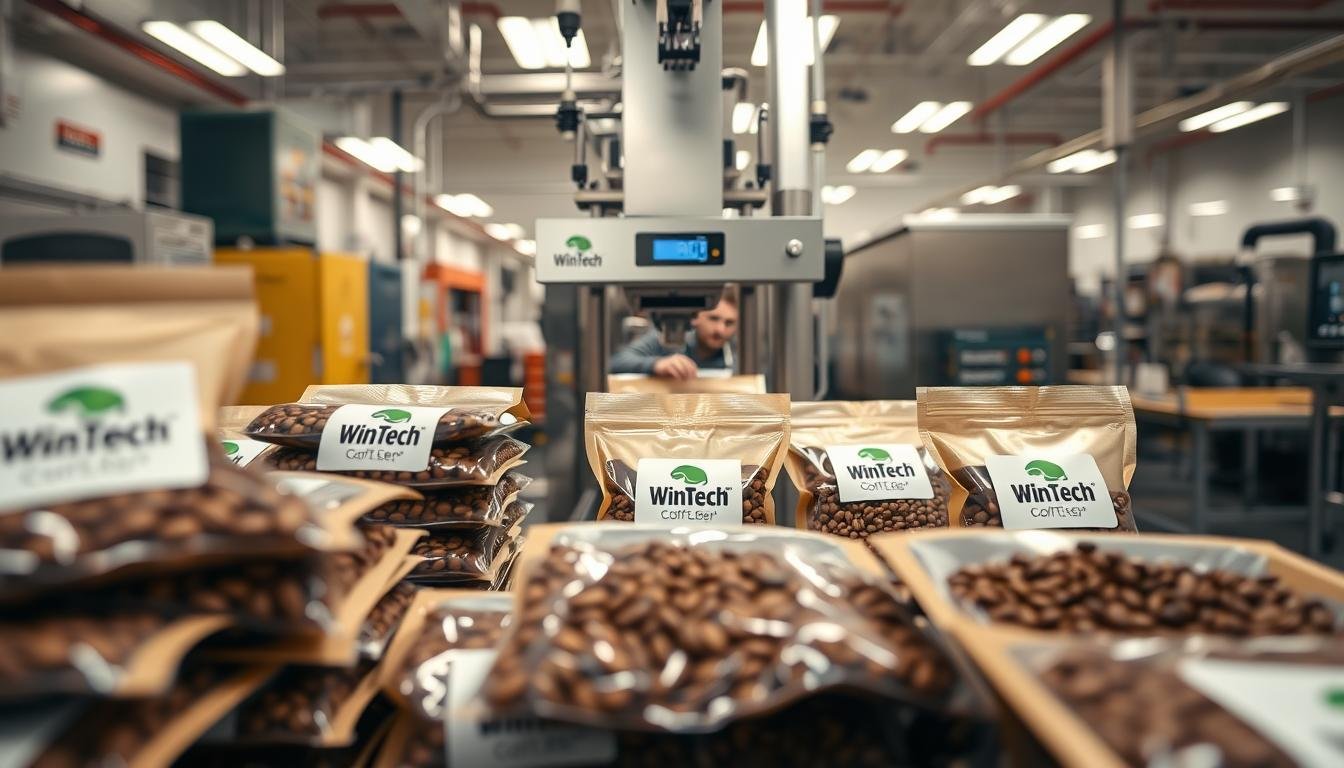
Have you ever wondered what keeps your favorite coffee beans fresh and perfectly measured from production to your morning brew? The intricate world of packaging of coffee beans is more complex than you might imagine.
As the global coffee market approaches a staggering 97 billion euros by 2023, the importance of specialty coffee packaging has never been more critical. Wintech Packaging of Coffee Beans stands at the forefront of revolutionizing how vacuum sealed coffee containers preserve the delicate essence of premium coffee beans.
Precision in packaging of coffee beans isn’t just about aesthetics—it’s a science that ensures every package delivers the perfect sensory experience. Inline checkweighers have emerged as game-changing technology, guaranteeing consistent quality and accurate weight measurements that meet both regulatory standards and consumer expectations.
Key Takeaways
- Packaging of Coffee Beans is crucial for maintaining bean quality
- Inline checkweighers provide precision in packaging
- Global coffee market continues rapid expansion
- Specialty packaging protects flavor and aroma
- Technology drives innovation in coffee packaging
Importance of Packaging of Coffee Beans for Quality Control

Coffee bean packaging represents a critical element in preserving the exceptional quality and sensory experience of your favorite brew. Professional roasters understand that proper packaging directly impacts the coffee’s flavor, aroma, and overall consumer satisfaction.
The science of coffee bean freshness preservation goes beyond simple storage. Specialized packaging materials play a crucial role in protecting delicate coffee characteristics from external degradation factors.
Protecting Flavor and Aroma Integrity
Roasted coffee packaging materials must create an optimal barrier against:
- Oxygen exposure
- Moisture infiltration
- Light contamination
- Temperature fluctuations
Whole bean coffee storage requires advanced technological solutions that maintain the beans’ original complexity. Vacuum-sealed containers with one-way valve systems ensure maximum flavor retention.
Shelf Life Optimization Strategies
Professional packaging standards recommended by international certifications like FDA, HACCP, and BRC include:
- Hermetic sealing techniques
- Modified atmospheric packaging
- High-barrier material selection
Meeting Customer Quality Expectations
Modern consumers demand transparency and quality in their coffee packaging. They seek intelligent packaging solutions that guarantee freshness, provide brewing information, and demonstrate environmental responsibility.
Packaging is not just protection—it’s a communication channel between roaster and coffee enthusiast.
By investing in sophisticated packaging technologies, coffee producers can extend shelf life, preserve intricate flavor profiles, and deliver an exceptional sensory experience from roastery to cup.
Integrating Inline Checkweighers in the Packaging of Coffee Beans

In the competitive world of coffee packaging, precision is paramount. Inline checkweighers have emerged as a critical technology for ensuring quality and consistency in airtight coffee bags and sustainable coffee packaging solutions.
Modern coffee production demands meticulous weight control. Inline checkweighers provide manufacturers with a powerful tool to guarantee accuracy across various packaging formats, including:
- Coffee capsules
- Ground coffee pouches
- Whole bean packages
- Coffee stick packs
The Benefits of Inline Checkweighers for Quality Assurance
Checkweighers offer multiple advantages for coffee packaging operations. They prevent economic losses by detecting potential overfilling or underfilling, which can significantly impact your brand’s reputation and bottom line.
The integration of coffee degassing valves with checkweighing systems ensures that each package meets strict weight specifications while maintaining product freshness.
Ensuring Accurate Weight Measurements for Coffee Packaging
Precision is crucial in coffee packaging. Advanced checkweighing systems communicate directly with filling equipment, making real-time adjustments to ensure consistent product weight. This technology helps you comply with strict regulatory standards and maintain customer trust.
How Inline Checkweighers Enhance Production Efficiency
By automating weight verification, inline checkweighers streamline your production process. They reduce manual intervention, minimize waste, and provide valuable data for continuous improvement in your sustainable coffee packaging strategies.
Investing in high-quality checkweighing technology is not just about meeting regulations—it’s about delivering a superior product that meets the highest standards of quality and consistency.
Future Trends in the Packaging of Coffee Beans
The packaging of coffee beans is undergoing a revolutionary transformation driven by consumer demands and technological innovations. Your coffee experience is about to change dramatically with emerging trends that prioritize sustainability, freshness, and design sophistication.
Specialty coffee packaging now focuses on transparent traceability and environmental consciousness. Brands are investing in eco-friendly materials that reduce carbon footprint while maintaining premium coffee quality. Nitrogen flushed coffee packaging represents a cutting-edge approach to preserving bean freshness, removing oxygen and extending shelf life for discerning coffee enthusiasts.
Consumers are increasingly seeking packaging solutions that tell a story beyond the product. Advanced coffee packaging technologies now incorporate QR codes, providing detailed information about bean origin, roasting date, and sustainability practices. This shift allows you to connect more deeply with your coffee’s journey from farm to cup.
The future of coffee packaging is smart, sustainable, and consumer-centric. Innovative designs that balance aesthetic appeal with functional preservation are setting new industry standards. Whether you’re a coffee roaster or a passionate consumer, these emerging trends promise to elevate your coffee experience through intelligent, responsible packaging solutions.